
Building Strong Foundations: What We Still Need to Learn About Young Multilingual Readers and Writers
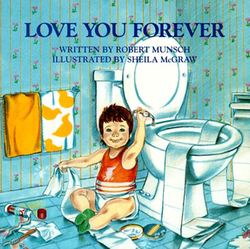
When we ask teachers, leaders, and parents to name their favorite childhood book, the answers often come with a smile . . . and a story. Katy’s is Love You Forever by Robert Munsch and the popular line that her mom often recited is one that she repeats to her own four children - "I'll love you forever, I'll like you for always, As long as I'm living, my baby you'll be.” Elisa has fond memories of recording herself reading Blueberries for Sal on a cassette tape to mail to her grandparents - “kerplink, kerplank, kerplunk.” She also cherishes the gift of learning to read in Spanish at school with the syllabic method of “ma, me, mi, mo, mu.”

For many of us, this question elicits memories of being read to by a parent or grandparent, listening to a favorite teacher read aloud, hearing a Bible story during Sunday School, or attending storytime at a local public library. These memories remind us that literacy is personal long before it becomes academic. Book memories evoke the relationships, rhythms, and rituals that make reading more than a skill; it’s a foundation for belonging. Yet for many young multilingual learners, the cornerstones look different, layered across languages and experiences. As we work to build richer literacy opportunities through our classrooms and pedagogies, we must understand the pillars that undergird strong readers and writers.
A substantial body of research underscores the significance of early literacy experiences across both formal and informal educational contexts (Colorín Colorado, 2015; WIDA, 2016, 2019). Rich, engaging literacy environments in early childhood and the primary grades are essential for cultivating foundational reading and writing abilities. Such experiences are particularly consequential for young multilingual learners, for whom early literacy engagement supports the concurrent development of linguistic and academic competencies across languages (Colorín Colorado, 2015; WIDA, 2016, 2019).
A Closer Look at Preschool & Early Primary Demographics
Today’s population of young, multilingual learners enrolled in preschool and the early primary grades offer a glimpse of tomorrow’s readers and writers. Our work at the University of Notre Dame’s ALMA Initiative compels us to focus on one growing demographic: Latino students. Latino children account for 19% of the total U.S. population, representing 62.5 million people in 2021 (Pew Research Center, 2023). Currently, Latino children make up the largest and most rapidly growing racial and ethnic minority population in the United States; 8% of Latinos in the U.S. are children ages 0-4, while 22% are within the ages of 5-17 (Pew Research Center, 2023).
 Demographically, Latino children are enrolled in preschool at substantially lower rates than their peers (Garcia & Gonzalez, 2012; Keierleber, 2019). A report from the University of Chicago Consortium on School Research and the Latino Policy Forum, argues policymakers and school systems should prioritize admission for English learners (ELs) in Pre-Kinder programs (De la Torre, Freire, & Blanchard, 2021), but matriculation practices vary widely.
The academic achievement gap between English learners and monolingual students often begins before Kindergarten and persists even after students have been in school for years (Zelasko & Antunez, 2000). High-quality early childhood instruction that accounts for social, cognitive, emotional, and communicative skills of ELs can help close or eliminate this gap (Waldfogel, 2012). School readiness and success for children who are multilingual learners is tied directly to mastery of their home language (Zelasko & Antunez, 2000). Access to excellent bilingual, multicultural preschool programs is critical for children from families who speak home languages other than English (De la Torre, Freire, & Blanchard, 2021; Zelasko & Antunez, 2000).

Given the demographic imperative and opportunity, we invite you to imagine with us an educational environment where students’ home languages and cultures are valued for their own sake, and become bridges to English literacy.
Building a Strong Foundation Begins With Home Language Development
For young English learners, learning foundational phonics and reading skills in Spanish is a helpful bridge to English literacy (Helios, 2020; NYSED, 2025). Furthermore, learning to read in Spanish is a worthy goal in its own right, affirming and sustaining culture and language for young Latino students (Hughes, 2024). Since 30-40% of words in English and Spanish are cognates, with guidance early literacy gains can transfer across languages (Meyer, 2010). Investing in multilingual preschool and early elementary programming for students identified as ELs may reduce the need for future intervention (Nascimiento, 2016). Due to the fact that foundational literacy skills transfer between languages (Colorín Colorado, 2015; Meyer, 2010), young learners stand to benefit immensely from learning to read in English and Spanish simultaneously or sequentially.
Given what we know about the benefits of literacy development in a child’s home language (in this case, Spanish), as well as English, what does the research reveal or conceal about young multilingual readers and writers?
What We Know:
- Oral language development (speaking and listening) is a critical predictor of future reading and writing success (WIDA, 2019).
- Age and timing of exposure to both languages matters for literacy success (Eunjung Relyea & Amendum, 2019; Meyers, 2010; WIDA, 2016). Early Spanish reading competence, ideally by the end of Kindergarten, is positively related to growth in English reading through grade 4 (Eunjung Relyea & Amendum, 2019).
- Surprisingly, the amount of Spanish children use does not seem to limit English reading or language skills; in fact, regular use of Spanish supports home language and literacy development, while English skills continue to develop, mostly unimpeded (Wagley et al., 2022).
What We Don’t Yet Know:
- Since Spanish has a more transparent orthography (more consistent sound‑letter mapping) than English, this means decoding in Spanish is easier in many respects (Eunjung Relyea & Amendum, 2019; Meyer, 2010). Research supporting the transfer of decoding skills is robust and somewhat understood, but finer‐grained details (like reading fluency, speed, error types) are still being worked out.
- It’s not always clear which Spanish oral or literacy skills are most helpful for transferring into English or under which conditions e.g., when children have balanced exposure, or strong Spanish literacy) (Guiguere & Hoff, 2024).
- We don’t yet have strong, precise estimates of how much Spanish or English exposure is needed to produce various outcomes (e.g. for near‑monolingual or balanced bilingual levels) (Eunjung Relyea & Amendum, 2019; Guiguere & Hoff, 2024).
A Look Forward
Early literacy foundations built upon home language development are the linchpin to academic success for young, multilingual learners. As our schools seek to better meet the needs of our youngest learners, multilingual literacy tenants can prove transformative for children and their families. Opportunities to engage in multilingual reading and writing during the preschool and early elementary years spark curiosity, build capacity, honor students’ home languages and cultures, and pave the way for academic success (WIDA, 2019). However, there is insufficient research on young, multilingual learners’ literacy practices (Colorín Colorado, 2015; Eunjung Relyea & Amendum, 2019). This may be due to the technical and logistical challenges of assessing young learners, particularly those who are bilingual, in ways that can effectively capture their burgeoning, bilingual early literacy knowledge and skills.

Like our memories of our favorite childhood books and the caring adults who introduced us to these literary “friends,” we believe (and research supports) that multilingual early literacy is pivotal to building a love for reading and writing, setting the stage for future academic success.
In our second post in this series (forthcoming, October 28), we turn our attention to what the research on the Science of Reading and Writing says about teaching young, multilingual learners, as well as angles where further research is needed in the case of learning to read in both Spanish and English. Join us!
References
Colorín Colorado (2015). Early literacy instruction in Spanish: Teaching the beginning reader. https://www.colorincolorado.org/article/early-literacy-instruction-spanish-teaching-beginning-reader
Eunjung Relyea, J. & Addendum, S.J. (2019). English reading growth in Spanish-speaking bilingual students: Moderating effect of English proficiency on cross-linguistic influence. https://pubmed.ncbi.nlm.nih.gov/31313281/
Guiguere, D. & Hoff, E. (2024). Bilingual children's vocabulary skills at 5 years predict reading comprehension development within, not across, languages. https://pubmed.ncbi.nlm.nih.gov/38425731/
Helios Education Foundation (2020). Dual language education for young learners: Lessons in literacy and language acquisition for educators. https://www.helios.org/media/5yec5opj/dual-language-immersion-for-young-learners.pdf
Hughes, D. (2024). The science of reading, en español. Age of Learning. https://www.ageoflearning.com/the-science-of-reading-en-espanol/#:~:text=Learning%20to%20read%20in%20one's,takes%20a%20syllable-centric%20approach
Meyer, K.A. (2010). Supporting early Spanish literacy in dual language classrooms. Soleado, Winter 2010, 10-11.
Nascimiento, F.C. (2016). Benefits of dual language immersion on the academic achievement of English language learners. The International Journal of Literacies, 24(1), 1-15.
National Center for Education Statistics. (2024). English learners in public schools. https://nces.ed.gov/programs/coe/indicator/cgf/english-learners-in-public-schools
New York State Education Department. (2025). Science of reading: The PreK years. New York State Literacy Initiative. Brief 4 of 7, 1-5.
Pew Research Center. (2023). Facts on Latinos in the U.S. https://www.pewresearch.org/race-and-ethnicity/fact-sheet/latinos-in-the-us-fact-sheet/
Wagley, N., Marks, R.A., Bedore, L.M. & Kovelman, I. (2022). Contributions of bilingual home environment and language proficiency on children’s Spanish–English reading outcomes. https://srcd.onlinelibrary.wiley.com/doi/10.1111/cdev.13748
Waldfogel, J. (2012). The role of out-of-school factors in the literacy problem, Future of Children, 22 (2), 39-54.
WIDA (2016). Can do descriptors: Early years. https://wida.wisc.edu/sites/default/files/resource/CanDo-Descriptors-Early-Years.pdf
WIDA (2019). Guiding principles of language development. https://wida.wisc.edu/sites/default/files/resource/Guiding-Principles-of-Language-Development.pdf
Zelasko, N., & Antunez, B. (2000). If your child learns in two languages. National Clearinghouse for Bilingual Education. https://eric.ed.gov/?id=ED447713
